On 1 September 2026, at the Global Shrimp Forum in Utrecht, SIPA hosted a side event for the seafood trade. Around 30 participants joined us to consider a question the sector rarely asks in calm times: what happens when the next food-safety issue arrives, and who will speak for the trade?
SIPA’s president, Ivan Bartolo, opened the session with the story of the Alliance’s origins and early direction. SIPA was founded during the chloramphenicol crisis of the 1990s, at a moment when the seafood sector felt it needed to collectively challenge the European Commission with scientific data and evidence.
 SIPA president Ivan Bartolo opening the side event at the Global Shrimp Forum 2026, Utrecht.
That challenge was the first of many. Regulation protects public health, and no one disputes that. But rules drafted under pressure, without a grasp of their practical consequences, produce disproportionate rejections, avoidable food waste and real economic damage.
The second half was a panel discussion on scientific research priorities for food safety and imported seafood, feeding directly into SIPA’s research programme. It was moderated by Jan Kwakman, joined by Bert Van Loock (Aquamarine-Tradimer) and Volker Loock (German Seafood Association).
Rather than settling on conclusions, it opened up practical issues the trade lives with daily — exactly the ground where SIPA works:
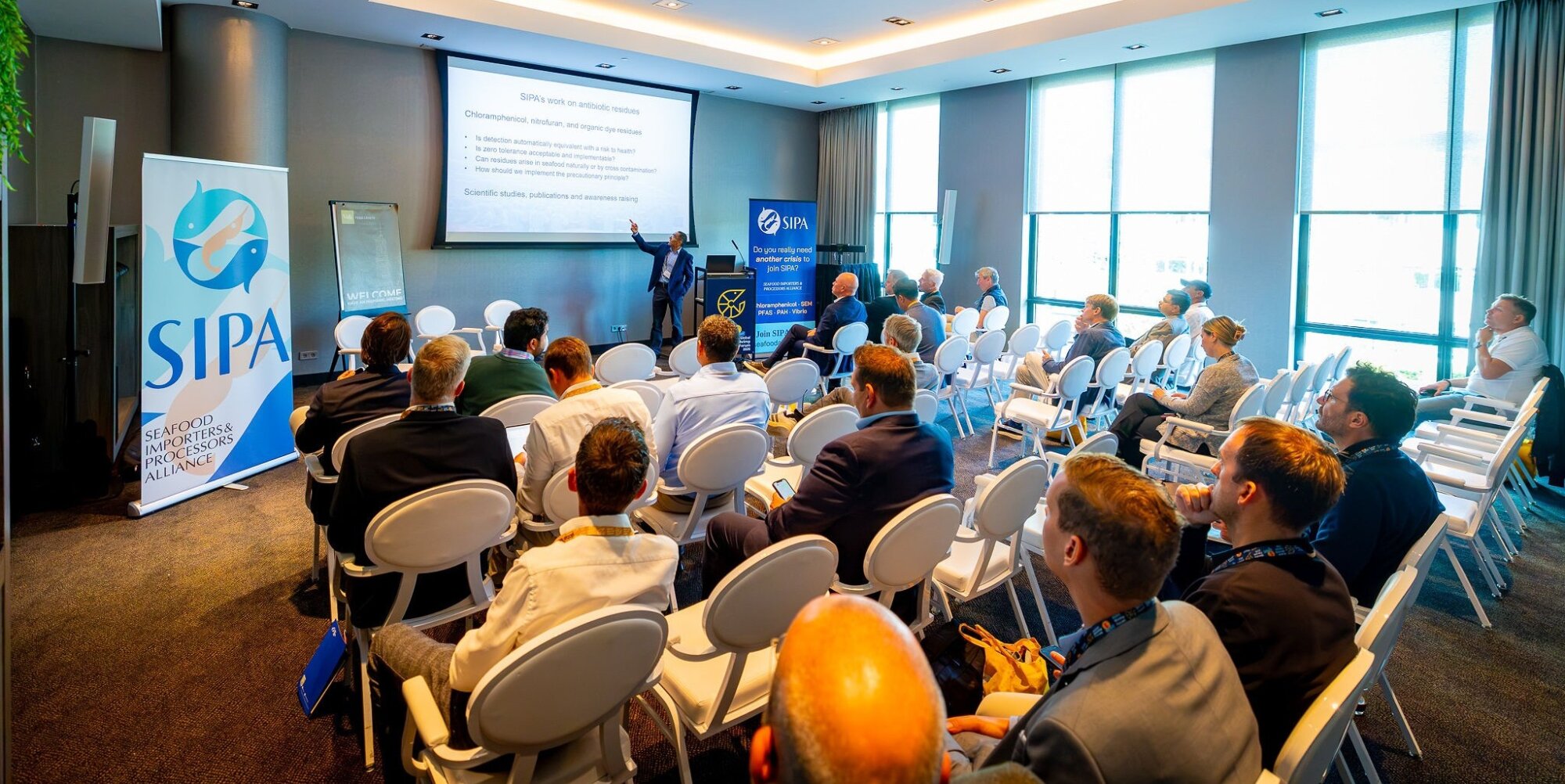
Around thirty participants joined the SIPA side event on 1 September 2026.
SIPA is deliberately low-threshold: the annual contribution is modest, and cost should never keep a company outside. The benefits are collective:

